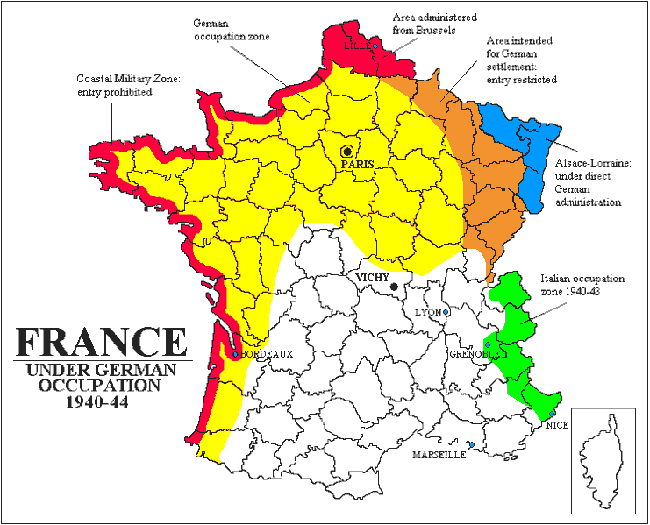
Vichy: France under the Nazi regime (1940-44)


Below is another very good lecture by Yale's Prof. John Merriman on the Nazi occupation of  France during World War II.


Film footage of Adolph Hitler in Paris.


The late French film director Louis Malle directed "Au Revoir Les Enfants" (1897) a film about the occupation and the deportation of French Jews by the Nazis and their French collaborators. Malle drew on his own memories of being a school boy during this period. He was a witness to fellow students being taken away to the camps because they were Jews.  Read Roger Ebert's review of the film here.

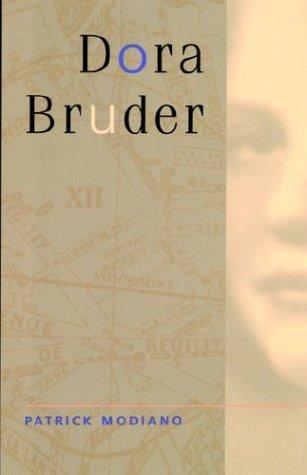
Modiano, Dora Bruder


We will discuss Patrick Modiano's novel/memoir/history/detective story, Dora Bruder on Thursday, April 21. Here are some questions to consider as you read it:

1) How much of the life of Dora Bruder is Modiano able to reconstruct? What does he learn about her? Her parents? Other Jews?

2) What do we learn about the fate of Parisian Jews during the German occupation?

3) How has Paris changed or not changed between the 1940s and the 1990s (when Modiano wrote this book)?

4) What part does the cityscape of Paris play in his work?

Josephine Baker, "I Have Two Loves"

One of Josephine Baker's most evocative songs was "J'ai deux amours" ["I Have Two Loves"], containing the famous lines:

J'ai deux amours --
Mon pays et Paris

Paris toujours

C'est mon rêve joli


I have two loves --

My country and Paris

Paris forever

That's my pretty dream.


The song was originally developed for her role in the show Paris qui remue [Paris Sizzles] in which she played a young native girl from the French empire in love with a dashing young Frenchmen. But audiences assumed that the "my country" was America. Later, Baker changed the line to "My country is Paris."

Popular music in the 1930s

Hard times beginning in the 1930s resulted in a wave of nostalgia and romanticization of working-class Paris that was especially evident in film and popular song. In René Clair's 1933 film, 14 juillet [14 July], a character sang:

A Paris, dans chaque faubourg
Le soleil de chaque journée
Fait en quelques destinées
Eclore un rêve d'amour

In every Paris district

The sun, as it rises,
For some brings into blossom

A dream of love

In 1931, Vincent Scotto and Jean Rodor wrote "Sous les ponts de Paris":

Sous les ponts de Paris,
Lorsque descend la nuit,
Comme il n'a pas de quoi s'payer une chambrette
,
Un couple heureux vient s'aimer en cachette.

Under the bridges of Paris,
When darkness falls,

With no money to pay for a room,

A happy couple can secretly make love.

No one embodied this trend more than Edith Piaf, a singer who rose from working-class origins in the Belleville neighborhood of Paris to become a successful performer. Her most famous songs, "Je ne regrette rien," and "La vie en rose," both date from 1946, but this song from 1936 evokes the world of Parisian street children. The French lyrics and an approximate English translation can be found here.


Riots in Paris, 1934 and 1935

Here is the film clip I showed in class regarding the Stavisky Affair riots by the far right in Paris in 1934 and the peaceful counter-demonstration the following year by the Socialist, Radical-Socialist, and Communist parties in which they affirmed their solidarity in advance of the 1936 elections.

The narration is in French, but don't worry if you can't understand it. At about one minute into the clip, the two demonstrations are separated by some shots of the Nazis marching in Germany (not in Paris!). The man making a speech during the 1935 demonstration is Socialist leader Léon Blum, who will become the French premier under the Popular Front government in 1936.

The Lives of Josephine Baker

There are two very good documentary films about Josephine Baker: Josephine Baker: The First Black Super Star (2005) and Chasing a Rainbow: The Life of Josephine Baker (1986). A third highly romanticized film version of her life was made for HBO in 1991, The Josephine Baker Story, and starred American actress Lynn Whitfield. The two documentaries are available on Youtube. The third film is not although I have posted the trailer.


Orwell, Down and Out in Paris and London


On Thursday, we will discuss the Paris half of George Orwell's Down and Out in Paris and London. Here are some questions you should consider:

1) How does Orwell survive in Paris? What are the work and survival options for the penniless?

2) What kind of international community does Orwell find in Paris?

3) How does he portray the French?

4) How does Orwell's experience in Paris compare to that of Hemingway's?

5) Will you ever eat in a Paris restaurant again? (i.e. What do we learn about the restaurant and hotel trade in Paris?)

Map of Hemingway's Paris

Here are the locations of some of the key expatriate sites in Paris. Click on a blue place marker to find out what it is.


View Hemingway's Paris in a larger map

Surreal Women or "Yes gentlemen, SHE is more than just a muse!"


AND (click here) for a short interview with San Francisco State's very own Professor Emerita Dr. Whitney Chadwick who pioneered the study of WOMEN and SURREALISM!


Surrealism or "The Reality Above"

The False Mirror, René Magritte, oil on canvas, 1928

SAY THE WORD OUT LOUD 
THREE TIMES 
IN 
FRONT OF A MIRROR 
AT 
MIDNIGHT 
AND 
SEE WHAT HAPPENS!

(or just click the links if you don't like scaring yourself 
or 
if you believe something incredible could happen 
and 
the incredible is something that you are not accustomed to experiencing.)


POST SCRIPT: 
SEE WHAT COULD HAVE HAPPENED 
HAD YOU TRIED THE OLD 
MIRROR- AT-MIDNIGHT TRICK?


The surrealist group in Paris, circa 1930. From left to right: 
Tristan Tzara, Paul Éluard, Andre Breton, Hans Arp, Salvador Dali, Yves Tanguy, 
Max Ernst, Rene Crevel, Man Ray.


WHO WERE THE SURREALISTS OF PARIS 
(and other places too)?


"Surrealism" from the BBC TV series "The Shock of the New"